

Kapoor Galleries · A Gandharan sculpture
Seated in Stillness,
in Gray Schist
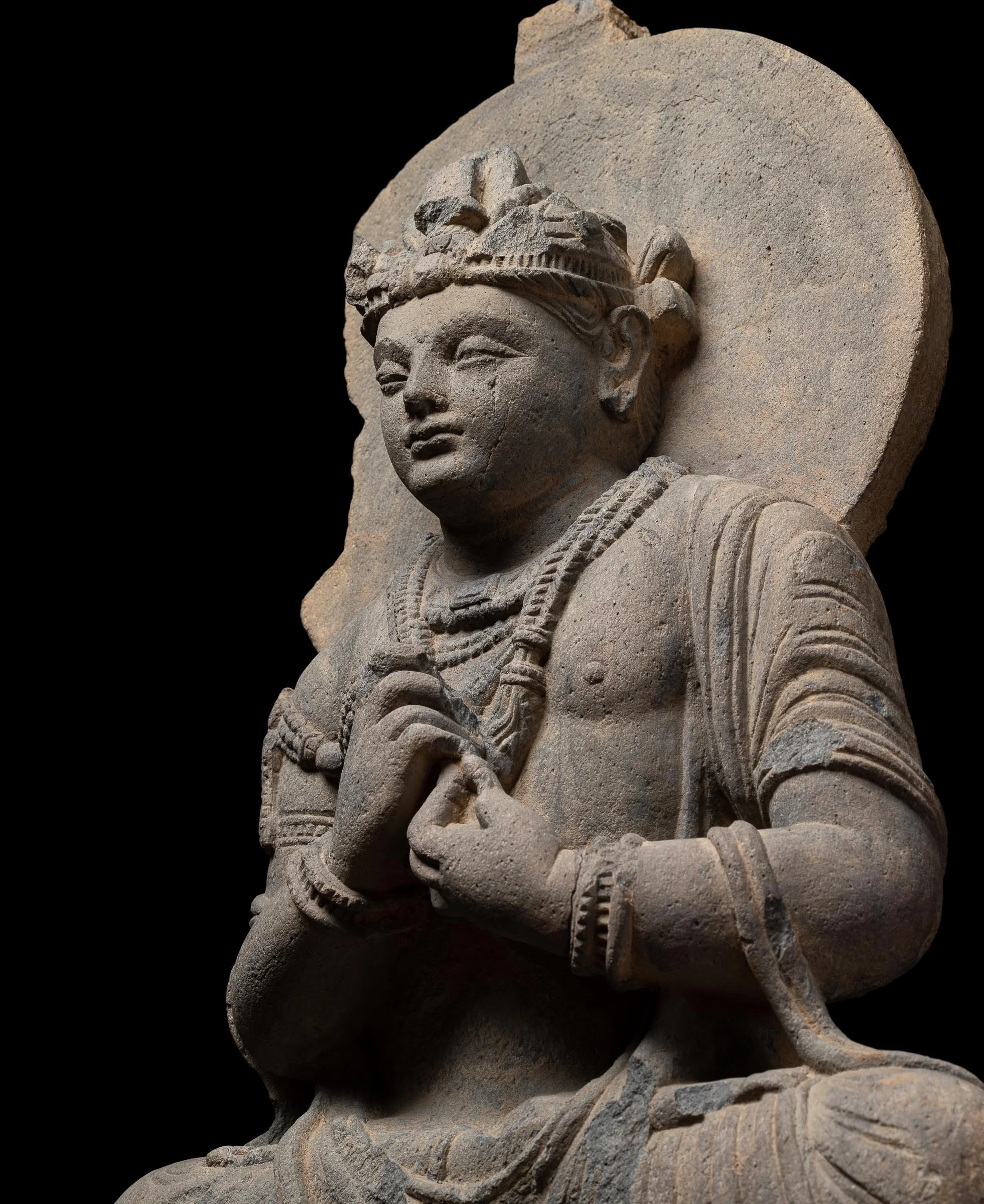
The figure sits in dhyanasana, serene-faced, the marks of nobility encircled in a halo, his hands holding his necklace. The robe drapes over one shoulder and moves in high relief across the torso, gathering in a fold over the legs before it falls over the cushioned seat — drapery carved with the confidence of a sculptural tradition that had been perfecting it for generations.
Where two worlds carve
Classical proportion, a meditative stillness.
Gandhara, in the northwest of the Indian subcontinent, held a vital position along the Silk Routes, and from the 1st through the 5th centuries C.E. its art joined the symmetry and human proportion of the Greco-Roman world to the aims of Mahayana Buddhism. The waves of hair rising into a top-knot, the almond-shaped eyes and rounded face framed in the halo, the fall of the drapery over body and legs — all are hallmarks of that meeting, and all are present here.
The carving up close
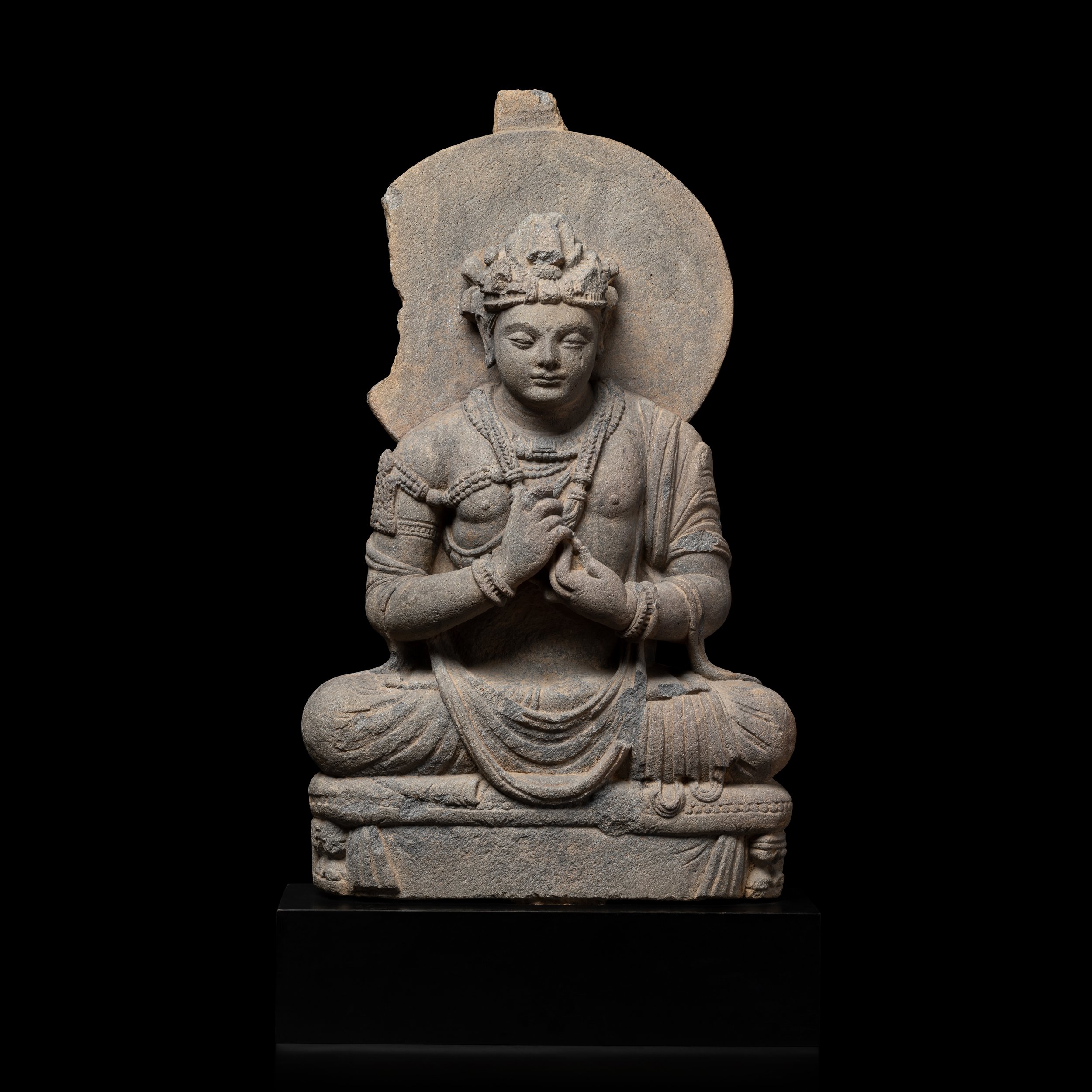
Drapery in high relief, a face at rest.
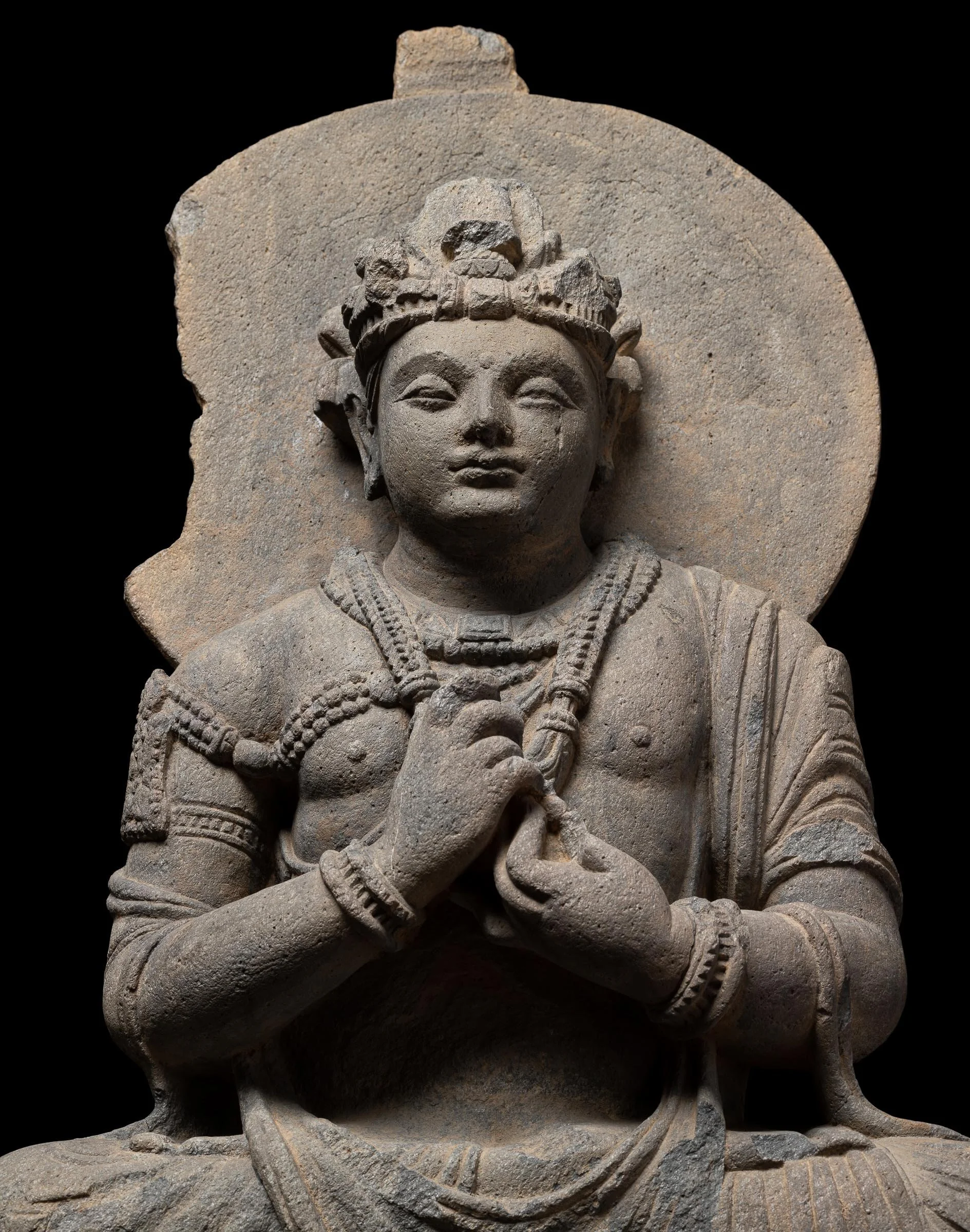
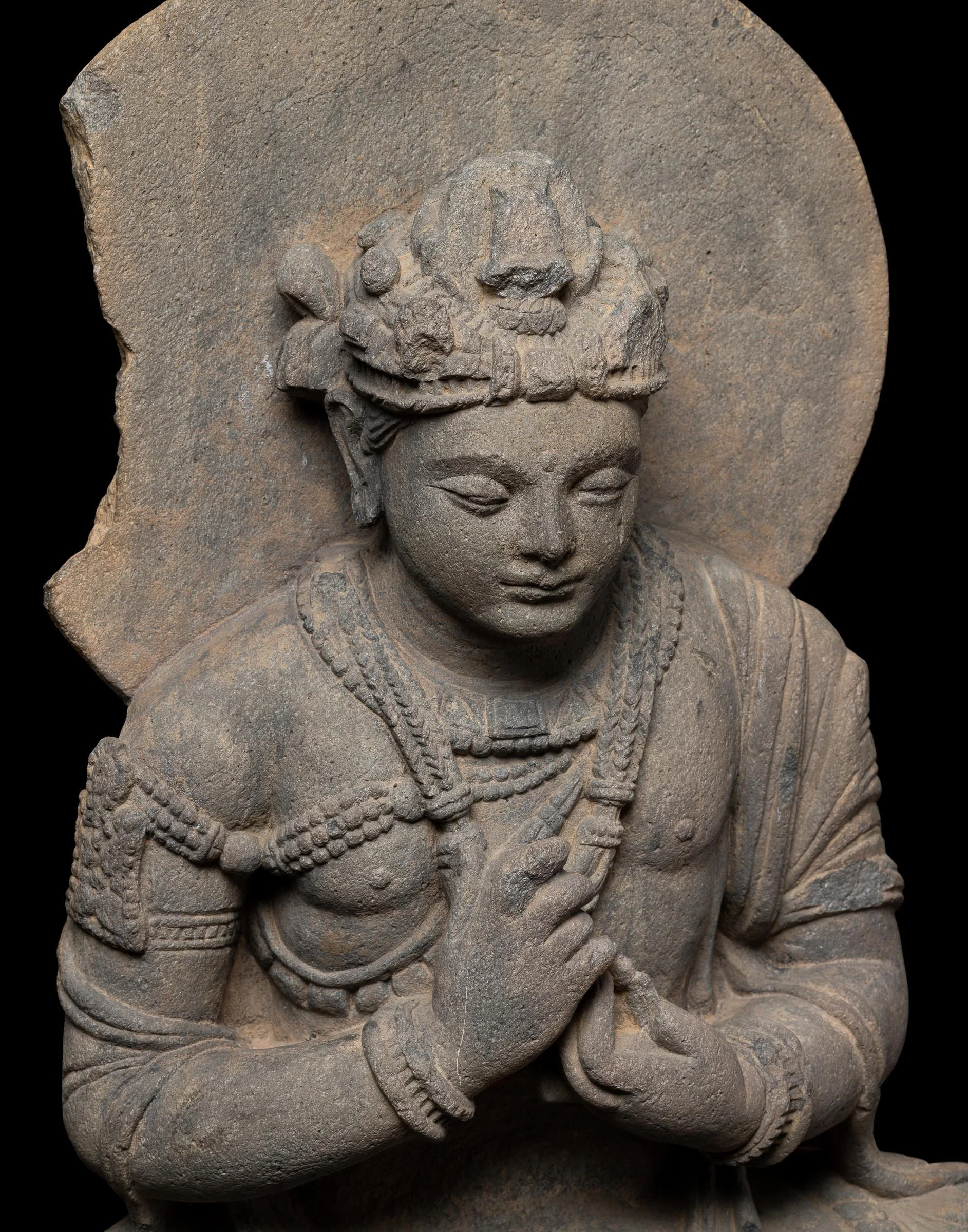
Seen closely, the sculpture's work is in its surfaces: the robe's folds undulate across the torso rather than lying flat against it, the jewellery is carved as carefully as the face, and the cushioned seat grounds the figure's stillness in something soft and ordinary. It rewards unhurried attention, and returns that attention in detail.
Provenance & Publications
Provenance: Sotheby's New York, 20 March 1997, lot 47. Sotheby's New York, 20 March 2013, lot 267.
Published: Himalayan Art Resources, item no. 1322.
Provenance, advisory & appraisal
Every collection carries a history. We welcome enquiries about provenance research, art advisory, and appraisal services.
Explore our services ↗